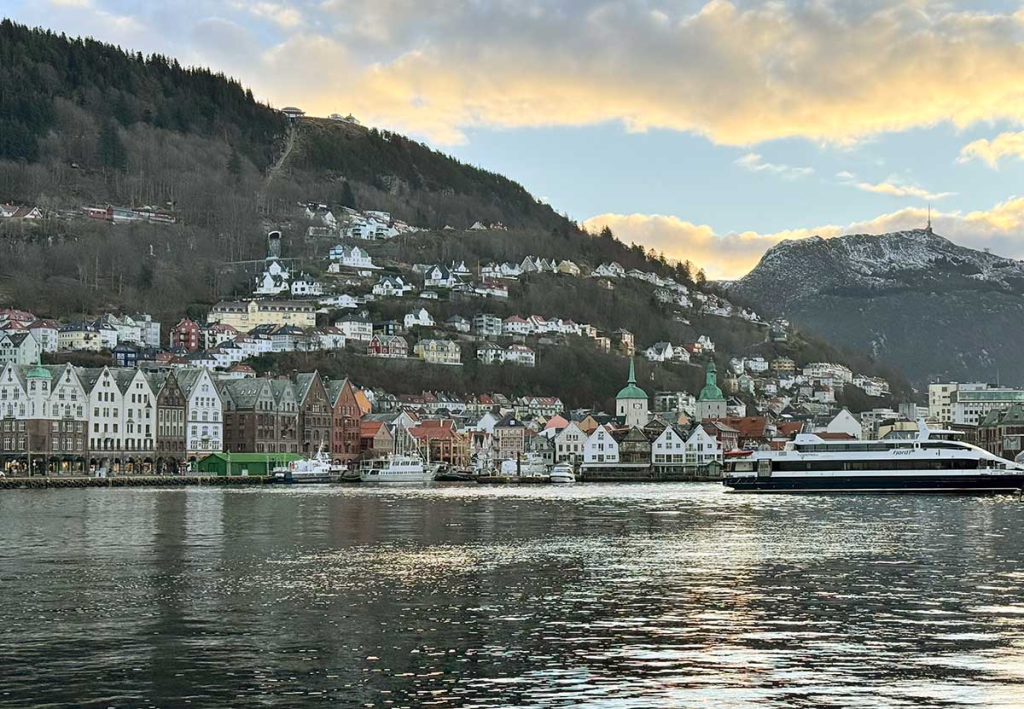
Bergen, founded around 1070 by King Olav Kyrre. It became a significant trading city and served as Norway’s capital during the 12th and 13th centuries.
As a trading city, Bergen had established itself as the principal source of dried cod in Europe. The city was home to many North German merchants who would trade with the fishermen who came down from the north of Norway each summer.
Throughout history, Bergen has been beset with numerous fires. The first came in 1198 when, during the civil war, the Bagler (aristocracy) faction set fire to the city. This was done as part of a battle against the Birkebeiner (rebels/poor) faction. Fifty years later, Holmen and Sverresborg burned with the loss of 11 churches.
Modern Bergen is known as the gateway to the fjords and is an important economic centre in western Norway.
UNESCO Sites
Bryggen
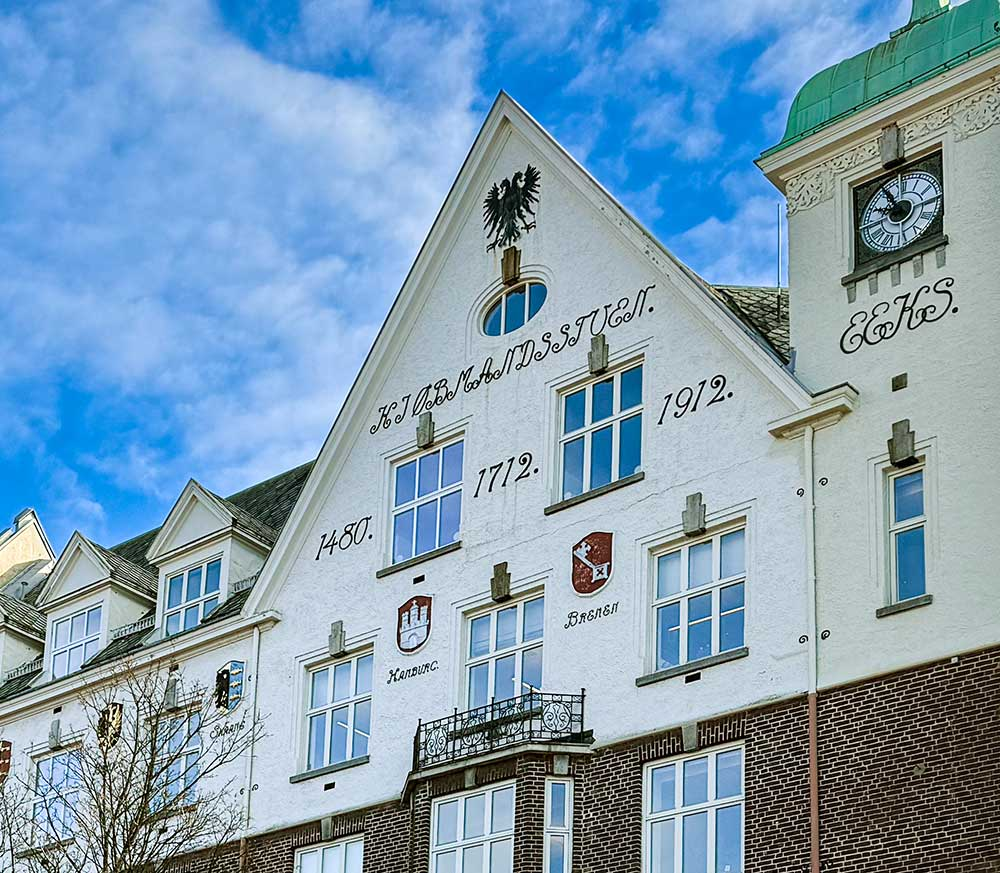
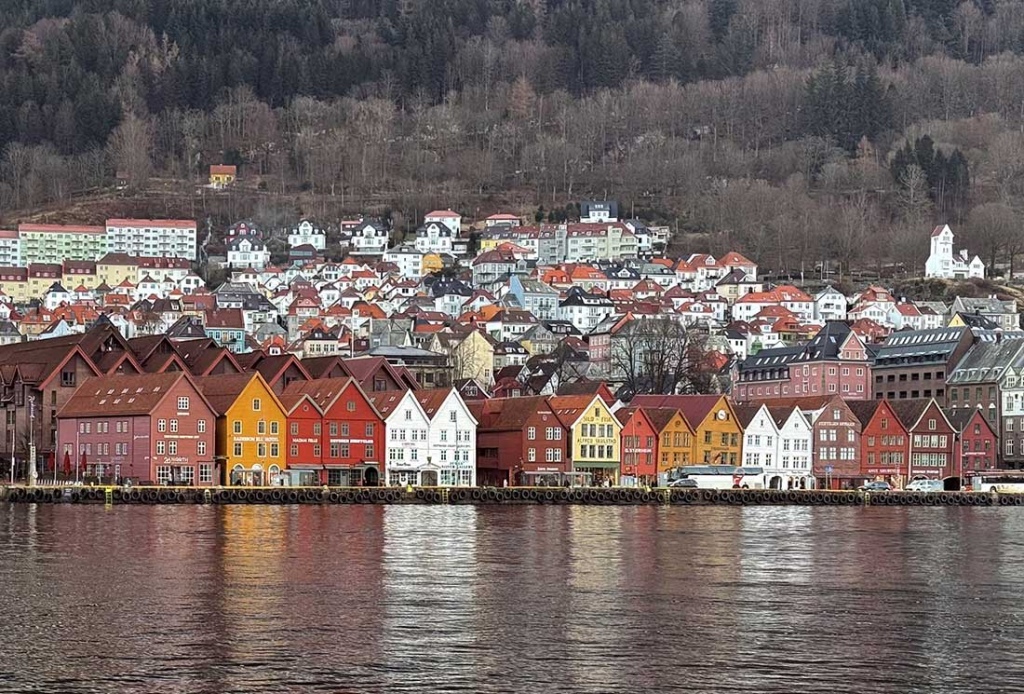
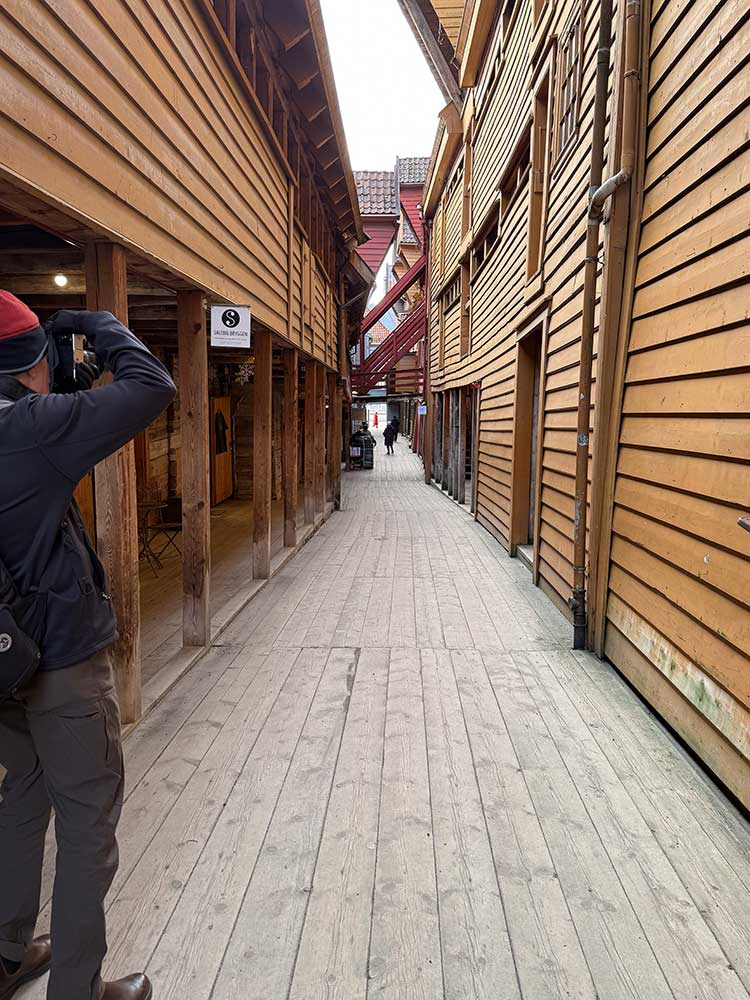
Bryggen, the old wharf of Bergen, is a reminder of the town’s importance as part of the Hanseatic League’s trading empire from the 14th to the mid-16th century. Many fires, the last in 1955, have ravaged the characteristic wooden houses of Bryggen. Its rebuilding has traditionally followed old patterns and methods, thus leaving its main structure preserved, which is a relic of an ancient wooden urban structure once common in Northern Europe. Today, some 62 buildings remain of this former townscape.
The Hanseatic League was an organization founded by north German towns and German merchant communities abroad to protect their mutual trading interests. The League dominated commercial activity in northern Europe from the 13th to the 15th century.
Despite Bryggen burning several times, most recently in 1955, it has been fully restored each time. With its colorful wooden buildings, cobblestone streets, and rich maritime heritage, Bryggen stands as a testament to Bergen’s medieval past and enduring legacy as a thriving port city.
Urnes Stave Church
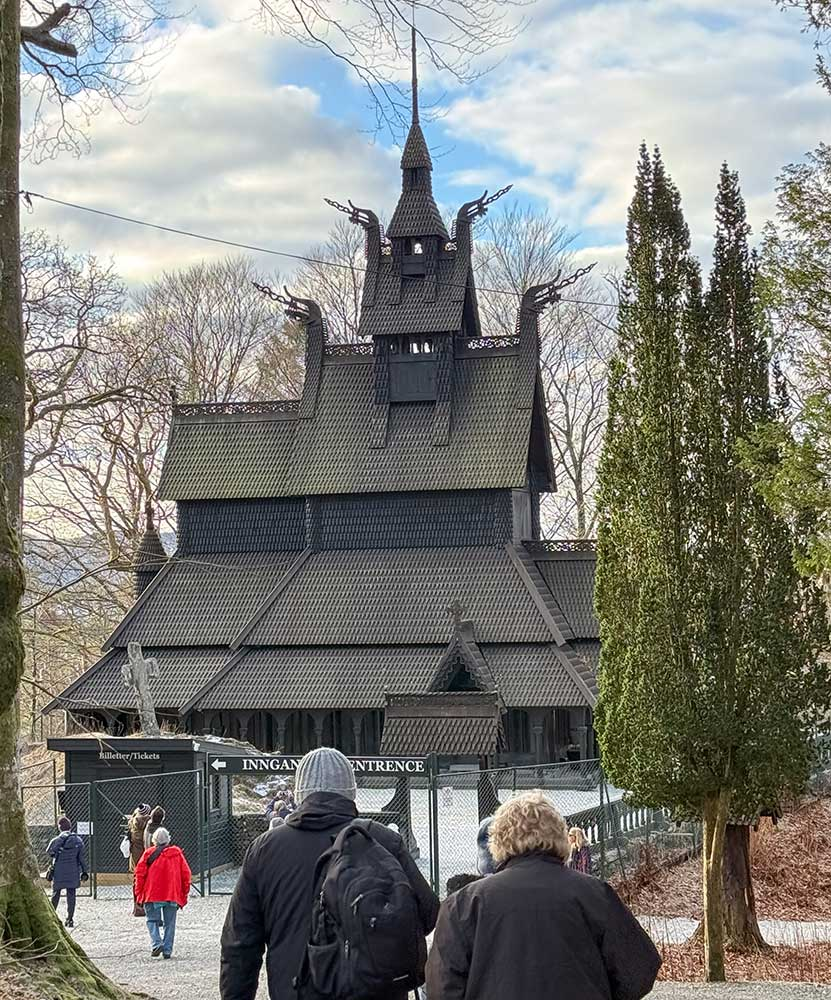
The wooden church of Urnes (the stavkirke) stands in the natural setting of Sogn og Fjordane. It was built in the 12th and 13th centuries and is an outstanding example of traditional Scandinavian wooden architecture. It brings together traces of Celtic art, Viking traditions and Romanesque spatial structures.
New Gloves
In my Preparing Blog, I failed to talk about the great pair of gloves that I purchased. They are made to work well with your cell phone. I tried them out on this outing and they really do work!
One other gadget I purchased is the little wrist hanger that you clip on your gloves so they don’t end up lost.
Did you notice there is only one glove in the photo?
I used them during our outing, and later I took them off to do something. I thought them dangling from my wrists looked silly, so I slipped them off my wrist. You guessed it, the left glove vanished somewhere in the street of Bergen.