
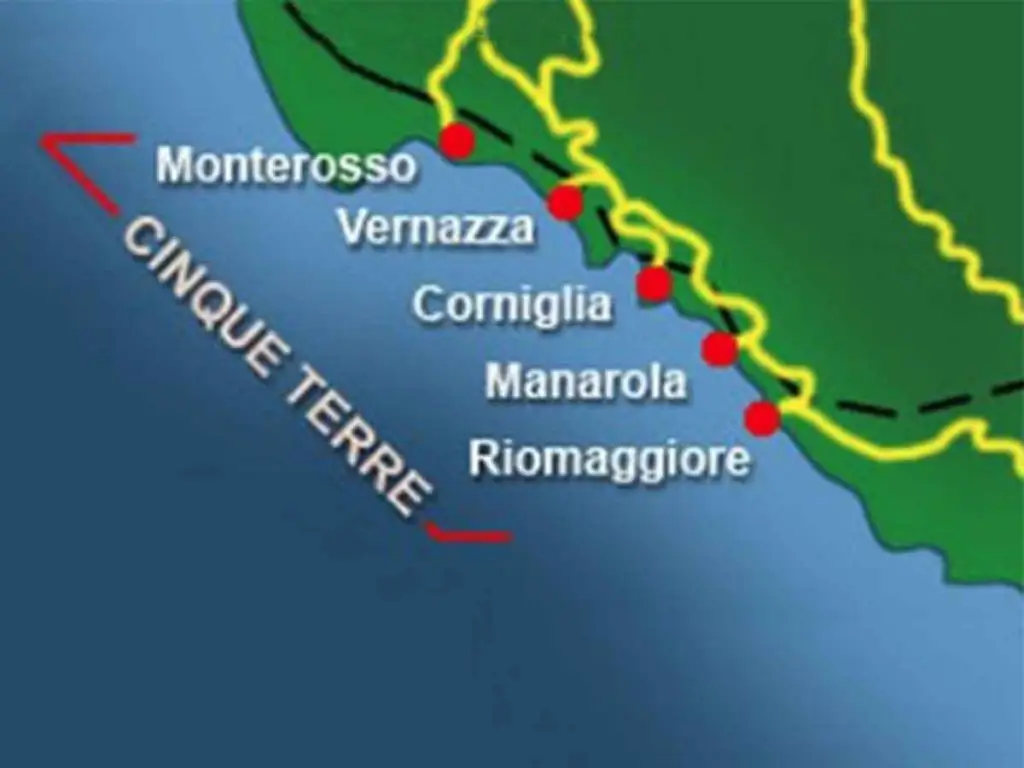
Tucked between Genoa and Pisa, is a string of five old fishing villages perched high on the Italian Riviera in the region Liguria. Until recent times, these villages were linked only by mule tracks and accessible only by rail or water.
Five traffic-free villages carving a good life out of difficult terrain. Hardworking locals and sunburned travelers enjoy the area’s unique mix of Italian culture and nature.
During our visit we were pedestrians within each village, and traveled between them with either train, ferry boat, or 4-wheel vehicle. (For more information about this area, be sure to check CinqueTerre.eu.com where I extracted some of this verbiage. Photos are mine.)
Monterosso
We spent three nights in Monterosso, the largest of the five coastal villages known as the Cinque Terre. The village is located on hills cultivated with lemons, vines and olives. Its amazing beaches, its beautiful reefs and the sea’s crystal clear waters make this small village one of the most popular of the Italian Riviera. Monterosso is divided in two parts marked by the medieval tower of Aurora. The old town of Monterosso is dominated by the ruins of the castle and characterized by typical narrow medieval streets, carruggi, with multi-colored terraced houses, shops and restaurants.
Riomaggiore
We took a train to Riomaggiore, the most southern Cinque Terre villages. The town climbs up along the ridges overlooking the sea and it is characterized from the typical stone houses with coloured façades and slate-roofs. Stroll along the main street Via Colombo down to the sea, where a small harbor, marina, is framed by lovely pastel houses and filled with brightly coloured fishing boats. There is a pebble beach located near the boat docking point and the picturesque harbor.
Vernazza
The small fishing village Vernazza is probably the most characteristic of the Cinque Terre and is classified as one of the most beautiful villages in Italy. Vernazza was founded about 1000 A.D. and was ruled by the Republic of Genoa starting in 1276. The medieval castle, Belforte, was built in the mid-1500’s, primarily to protect the village from pirates.
An ideal way to arrive to this breathtaking village is by sea. The tiny port is surrounded by subtle colorful typical Ligurian houses and the charming piazza is lined with good restaurants and bars. There is a small, sandy beach in the natural harbor the Church of Santa Margherita di Antiochia.
The village is surrounded by very steeply-terraced olive groves which are said to produce among the finest olive oil in the country.
Manarola
Manarola, built on a high rock 70 metres above sea level, is one of the most charming and romantic of the Cinque Terre villages. The tiny harbor features a boat ramp, a tiny piazza and picturesque multicoloured houses facing the sea. The harbor area is filled with colorful rowing boats and becomes the main sunbathing and swimming spot of the village from morning until dusk. In fact, this is the perfect place to spend a lazy day sunbathing and watching people jumping off the cliffs. Although there is no real beach here, it has some of the best deep-water swimming around. The village is all ups and downs, with steep narrow alleys carrugi, leading to the sea. NOTE: when I looked at my photos from Manarola, they all seemed to be of variations of the same view. So I only included two.
Corniglia
Corniglia is located in the heart of the Cinque Terre National Park on a small cape, 100 meters above the sea. It is the smallest of the five villages and also the least accessible. You have to climb the Lardarina staircase, 382 stairs, to reach the village or you can take the shuttle bus up from the train station. For our last outing, we’re driven up the mountain in 4-wheel vehicles driven by Hector and Barbara, locals from that region. Once you are up in the village, it is relatively flat.
Corniglia is an ancient Roman village that has a long and rich agricultural tradition. The village is surrounded on three sides by vineyards and stone terraces. Because of its size and relative inaccessibility, fewer tourists stay here, so there is more of a local feel. There are bars and restaurants here, but no real nightlife.
We toured the village and walked along the ancient trail to the city, past terrace with grape vines for there local wines. After that we drove to a charming farm house for lunch. All of the dishes were prepared with local produce grown at the farm or in the village. Definitely the highlight of our visit to the Cinque Terre.